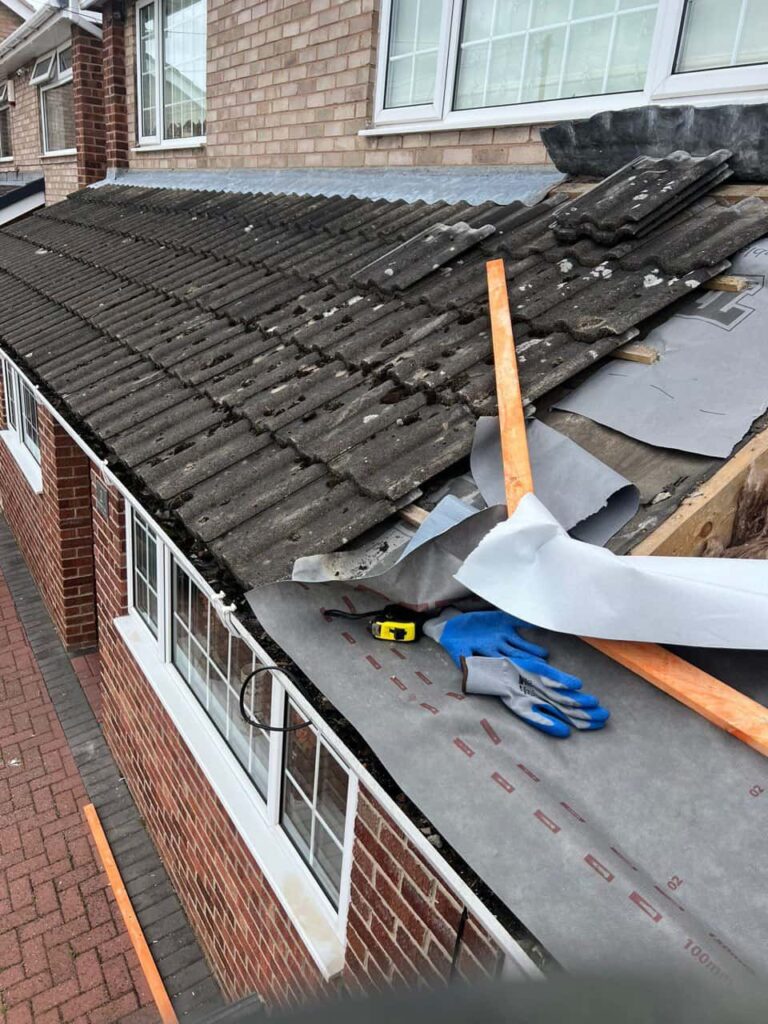
A single slipped roof tile can appear to be a very minor problem. The tile may have moved only slightly, there may be no visible water inside the property, and the rest of the roof may look perfectly normal from ground level. However, pitched roofing is designed as an interconnected covering, with individual tiles positioned and overlapped so that they work together.
When one tile moves out of position, it can disrupt this arrangement and potentially leave nearby areas more exposed. It can also indicate that something has changed within the fixings or supporting components in that section of the roof.
For homeowners in Hillfield, Coventry, having a slipped tile professionally assessed can help prevent a small defect from developing into a wider roofing problem. At Hillfield Roofing Repairs, we focus on identifying why the tile has moved and checking the surrounding roof before carrying out the appropriate repair.
How Do Roof Tiles Work Together?
Tiles on a pitched roof are not simply placed individually across the surface. They are arranged in courses with carefully designed overlaps that allow rainwater to travel down the roof and towards the guttering.
Each tile forms part of the protection for the surrounding area.
When the covering is correctly positioned, water is directed across the external surface rather than reaching the materials underneath.
A slipped tile can interrupt this arrangement by creating an unexpected opening or reducing the intended overlap.
Can One Slipped Tile Affect Its Neighbours?
Potentially, yes.
A slipped tile does not automatically mean that several surrounding tiles will fail, but it can make the affected area worth investigating more closely.
The original movement may have resulted from:
- A deteriorated fixing
- Damage to the tile
- Weather-related movement
- Problems with supporting components
- Previous disturbance
- General deterioration within that part of the roof
If nearby tiles have been exposed to similar conditions, they may also require inspection.
This is why a professional repair should consider more than the one visibly displaced tile.
Reduced Overlap Can Expose the Roof Beneath
The overlapping arrangement of tiles is fundamental to how a pitched roof sheds rainwater.
When a tile slips downwards or moves sideways, part of the area beneath the roof covering can become exposed.
Even a relatively small opening can provide a route for wind-driven rain.
The materials underneath may initially prevent moisture from reaching the interior of the property, which is why a slipped tile does not always cause an immediate ceiling leak.
However, the external covering is no longer functioning exactly as intended, making timely attention worthwhile.
Wind Can Affect an Already Vulnerable Area
A properly positioned roof covering is designed to cope with normal weather exposure.
Once a tile has moved, however, gaps or raised edges can potentially leave the affected area more exposed to wind.
Further poor weather may increase movement or place additional pressure on already vulnerable surrounding materials.
This does not mean that one slipped tile will inevitably cause several more to move. It means that leaving an obvious weakness unattended can allow changing weather conditions to place further stress on the area.
The Slipped Tile May Be a Symptom Rather Than the Main Problem
Sometimes the most valuable question is not “How do we put this tile back?” but “Why did it slip?”
If a tile has moved because its fixing has deteriorated, simply repositioning it without addressing the fixing would not provide an appropriate repair.
Similarly, if several tiles in the same area are becoming unstable, the underlying issue may extend beyond one covering.
Professional assessment can help establish whether the defect is genuinely isolated or part of a broader problem.
What Should Be Checked Around a Slipped Tile?
When inspecting an affected area, attention may need to be given to:
- The condition of the displaced tile
- Its fixing
- Adjacent tiles
- Nearby cracked or damaged coverings
- Supporting battens where relevant and accessible
- The condition of surrounding roof details
- Signs of moisture penetration
- Evidence of previous movement
The purpose is not to turn every slipped tile into a major roofing project. It is to ensure that the repair addresses everything genuinely affected by the defect.
Nearby Tiles May Already Be Loose
A tile can appear correctly positioned while being less secure than it should be.
This is one reason visual inspection from the ground has limitations.
If one tile has slipped following deterioration or weather exposure, neighbouring coverings may need to be checked for movement.
Identifying another loose tile during the original repair can allow it to be dealt with before it becomes the next visible problem.
Cracked Tiles Can Be Hidden Around the Affected Area
Movement can sometimes reveal or accompany damage that is difficult to identify from below.
A nearby tile may be cracked while remaining approximately in its normal position. Depending on the location of the damage, this may affect its ability to perform correctly.
Professional inspection allows the immediate surrounding area to be examined rather than assuming everything nearby is sound simply because it has not moved.
Why Water Ingress May Not Appear Immediately
One reason homeowners sometimes postpone slipped tile repairs is that the property remains dry inside.
However, internal dampness should not be the threshold for deciding whether external roof damage matters.
After passing through a weakness in the covering, moisture can encounter underlay and other parts of the roofing construction. It may also travel before becoming visible.
As a result, an external defect can exist for some time before an obvious internal symptom develops.
Repairing the covering promptly helps restore the roof’s first line of protection.
A Ceiling Stain May Appear Away from the Slipped Tile
If water does enter, the location of an internal stain does not necessarily correspond exactly with the displaced tile.
Moisture can follow underlay, battens, rafters or other surfaces before reaching a point where it drips.
This can make leak diagnosis more complicated once water penetration has become established.
Dealing with an obvious external defect before this happens can make the situation much more straightforward.
Can a Slipped Tile Simply Be Put Back?
Sometimes a relatively straightforward repair is possible, but the correct approach depends on why the tile moved.
If the tile remains serviceable and the relevant supporting components are satisfactory, it may be possible to secure the area appropriately.
If the tile itself is damaged, replacement may be required.
Where problems are discovered with nearby materials or supporting components, these should also be addressed as appropriate.
The repair should restore a dependable roof covering rather than merely improve its appearance from the ground.
What If Several Tiles Have Started Slipping?
Multiple slipped tiles deserve broader investigation.
If several coverings are moving within the same section, there may be a common reason.
Potential issues could involve deterioration of fixings, supporting components or more general ageing within that area.
Repeatedly repositioning individual tiles without understanding why several are moving may only address the symptoms.
A professional roofer can assess whether a localised repair remains sufficient or whether a larger section needs attention.
Slipped Tiles After Strong Winds Should Be Checked
Windy conditions can expose weaknesses that were already developing within a roof.
After strong winds, homeowners may notice:
- A tile sitting lower than neighbouring coverings
- A gap in the roof surface
- Broken material on the ground
- Tiles appearing uneven
- Movement around ridge or hip areas
Even if only one obvious defect is visible, checking the surrounding section can help determine whether anything else has been disturbed.
Early Repair Can Help Protect Serviceable Roofing
One of the main advantages of dealing with a slipped tile promptly is that the surrounding roof may still be completely serviceable.
Correcting an isolated problem while it remains limited can help protect nearby materials from unnecessary exposure.
This is an important principle in roof maintenance: preserve sound roofing where possible and deal with genuine defects before they have an opportunity to spread.
A small repair carried out at the appropriate time can therefore have value beyond the individual tile itself.
Does a Slipped Tile Mean the Roof Needs Replacing?
No.
One slipped tile is generally not enough on its own to conclude that an entire roof requires replacement.
If the surrounding covering and underlying roofing components remain in suitable condition, targeted repair may be entirely appropriate.
More extensive roofing work would normally only become a consideration where inspection reveals broader deterioration, such as numerous failing tiles, recurring defects or problems affecting larger sections of the roofing system.
The scale of the work should reflect the actual condition of the roof.
Why Professional Roof Inspection Matters
A slipped tile is easy to identify visually, but diagnosing the reason for it requires closer attention.
Professional assessment can determine:
- Why the tile has moved.
- Whether the tile itself remains usable.
- Whether neighbouring tiles are secure.
- Whether supporting components require attention.
- Whether moisture has reached the area beneath the covering.
- What repair is required to restore the roof properly.
This provides a more dependable solution than treating the visible symptom alone.
Professional Slipped Tile Repairs in Hillfield
At Hillfield Roofing Repairs, we provide professional roofing services throughout Hillfield, Coventry, including slipped tile repairs and the assessment of surrounding roof coverings.
Our approach is to establish why the problem has occurred before determining the appropriate repair. Where the defect is isolated, targeted work can restore the affected area while retaining serviceable roofing materials.
If nearby tiles or supporting components also show signs of deterioration, these can be identified during the assessment so that the wider problem is understood rather than waiting for another visible defect to appear.
Conclusion
One slipped tile can potentially make nearby areas of a roof more vulnerable because tiles depend on correct positioning and overlap to create an effective weather-resistant covering. Movement can expose underlying areas to rain, leave edges more vulnerable to wind and sometimes indicate that neighbouring fixings or materials also require attention.
That does not mean a single slipped tile automatically signals a serious roofing problem. In many cases, a professional inspection will confirm that the defect is localised and can be repaired without extensive work. The important thing is to identify why the tile moved and ensure the surrounding section remains secure.
For homeowners in Hillfield, Coventry, Hillfield Roofing Repairs provides professional roof inspections and repairs focused on addressing both the visible defect and its underlying cause. If you have noticed a slipped or displaced tile, contact our team to arrange an assessment before further weather exposure has an opportunity to affect the surrounding roof.
Call us on: 024 7542 4897
Click here to find out more about Hillfield Roofing Repairs
Click here to complete our contact form and see how we can help with your roofing needs.